
In a decision that reveals more about the real state of the EV market than any glossy concept video ever could, Toyota has halted development of the production version of the Lexus LF-ZC. The sleek, low-slung electric sedan that was meant to showcase Lexus’s next-generation battery tech, gigacasting manufacturing, and a genuinely advanced AI cockpit is now off the table.
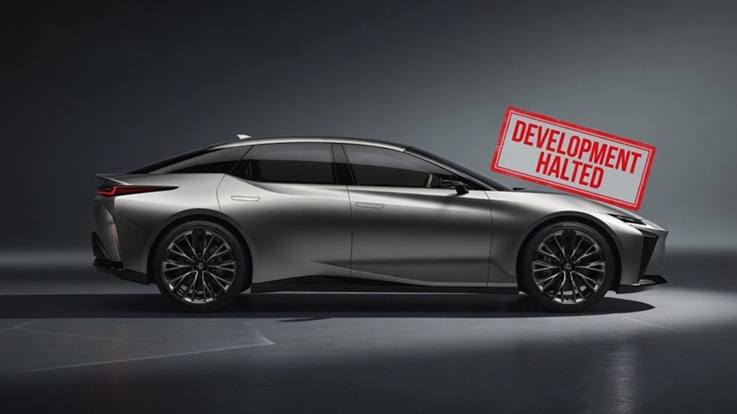
This wasn’t some minor concept car. The LF-ZC, first shown at the 2023 Japan Mobility Show, was positioned as a flagship expression of what a modern Lexus EV could be. It promised dramatically better range than today’s EVs (targeting roughly double conventional figures thanks to next-gen prismatic batteries), ultra-low drag, and the kind of refined, driver-focused experience Lexus buyers expect. Production was originally eyed for 2026, then pushed to mid-2027. Now it’s simply not happening.
Reports from Nikkei and Electrek indicate Toyota is redirecting resources toward SUVs and other vehicles that better align with current demand. The global EV slowdown is real, and U.S. policy shifts under the current administration have added uncertainty around incentives and costs for higher-priced imported EVs. Toyota apparently concluded that a luxury electric sedan — even a beautiful, technically ambitious one — wouldn’t move the needle enough in key markets like the United States to justify the continued investment.
This is the part most coverage is missing. This isn’t Toyota “abandoning EVs.” The company is still bringing updated versions of the bZ (formerly bZ4X) to the U.S., expanding its electrified crossover lineup, and continuing work on gigacasting and solid-state battery technology. What they’re abandoning is the idea that they must force a halo electric sedan into a segment where American buyers have already voted with their wallets.
The U.S. market reality Lexus is acknowledging
Walk any Lexus dealership in America and you’ll see the truth on the ground. The RX Hybrid, NX Hybrid, and TX Hybrid are the vehicles actually selling in volume. The RZ — Lexus’s current EV — is getting meaningful updates for 2026 (including more power in F Sport guise and the NACS port), but it’s still a niche player compared with the hybrid versions of the same platforms.
Luxury sedan buyers in the U.S. have been drifting toward crossovers and SUVs for years. When those buyers do go electric, many are choosing Tesla’s Model 3 or Model Y for the software experience and Supercharger network, or European options when they want traditional luxury cachet. A low-slung, stylish Lexus EV sedan would have been gorgeous on paper and in photos. In American driveways and garages, it would have faced an uphill battle for relevance and volume.
By killing the LF-ZC now, Toyota is avoiding the trap that has burned other legacy automakers: launching expensive, low-volume EVs that damage brand perception when they don’t sell or require heavy discounting.
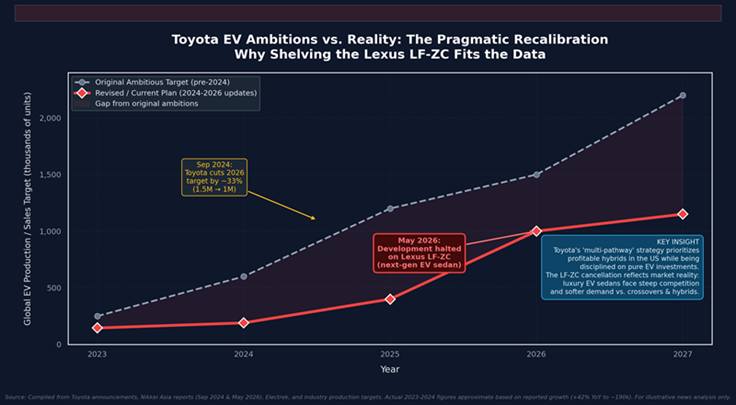
For U.S. customers who love Lexus for its reliability, quiet ride, dealer experience, and strong resale value, this decision is actually rational. It means Lexus can keep focusing engineering and manufacturing dollars on vehicles Americans demonstrably want right now — refined hybrids and plug-in hybrids that deliver most of the EV experience without range anxiety or charging infrastructure worries. The RX 450h+ and NX 450h+ already offer 37 miles of electric range in a package that feels like a natural Lexus.
It also buys time. Toyota has been more public than most about solid-state batteries and next-generation platforms. Killing one specific sedan program doesn’t mean those technologies are dead; it likely means they’ll be applied more selectively to vehicles with clearer paths to profitability. In a capital-intensive industry, that discipline matters.
The bigger signal here is that even Toyota — the company that spent years being criticized for moving too slowly on EVs — is treating electrification as a portfolio decision rather than a religious mandate. Hybrids remain the profit engine in the U.S. market. Selective, high-confidence EVs make sense. Expensive, low-volume halo sedans in a cooling segment do not.
Lexus electrification
Expect Lexus to lean harder into its multi-pathway approach in America: strong hybrid and PHEV SUVs that customers actually buy, a steadily improving RZ electric SUV, and continued development of the underlying technologies (batteries, manufacturing processes, software) that will eventually support future EVs when the market and economics align better.
The LF-ZC was supposed to be one of Toyota’s most important EVs because it represented the aspirational, technology-forward face of Lexus electrification. Scrapping it doesn’t mean Lexus is giving up on the future. It means they’re choosing not to fight the current market with the wrong weapon.
For American luxury buyers, that’s probably the more honest and ultimately more useful path. The vehicles that will actually sit in driveways and hold their value are the ones Toyota appears determined to keep getting right.
Related Post