
The Toyota Prius has long been the poster child for hybrid efficiency, but the fifth-generation model that debuted in 2023 transformed it into something far more desirable: a sleek, fun-to-drive hatchback that appeals to younger buyers without sacrificing legendary fuel economy. Now, as we head into the 2027 model year, Toyota is preparing a mild mid-cycle refresh—often called a facelift—rather than a full redesign. This isn’t the revolutionary sixth-generation overhaul some enthusiasts hoped for; instead, it’s a smart evolutionary update designed to keep the Prius fresh amid growing hybrid competition and shifting buyer preferences.
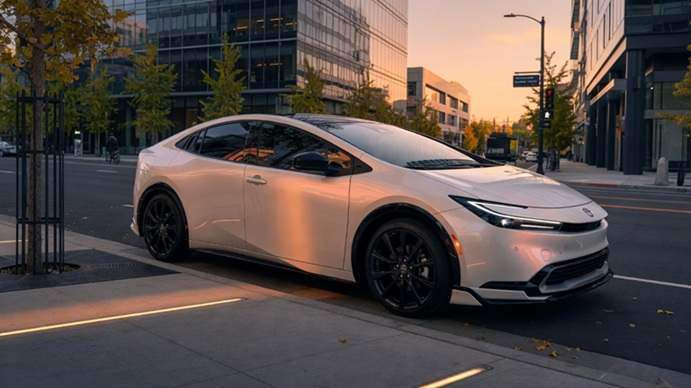
Expected to arrive in U.S. showrooms around fall 2026 (following summer 2026 production updates in Japan), the 2027 Toyota Prius builds on the current model’s strengths: bold styling, efficient powertrains, and practical technology. Toyota dealers in Japan reportedly stopped taking orders for the outgoing version by February 2026, signaling the refresh is imminent. Yet official details remain sparse—no spy shots of prototypes, no major patent leaks.
What we do know comes from reliable industry reports, forums like PriusChat, and Toyota’s established product cycles. This 2027 Toyota Prius prioritizes subtle refinements over radical shifts, ensuring it remains a compelling choice for eco-conscious drivers who also want style and everyday usability. Whether you’re considering a 2026 model or holding out for the 2027 refresh, here’s the hidden-in-plain-sight intel that goes beyond basic blog recaps.
Exterior Design: Subtle Tweaks (Old vs. New)
The current fifth-generation Prius shocked the world in 2023 with its low-slung, wide stance and coupe-like silhouette—ditching the “ugly duckling” image of earlier models for sharp, aerodynamic lines that scream modern efficiency. That bold design helped reverse years of stale perceptions and boosted appeal to a broader audience.
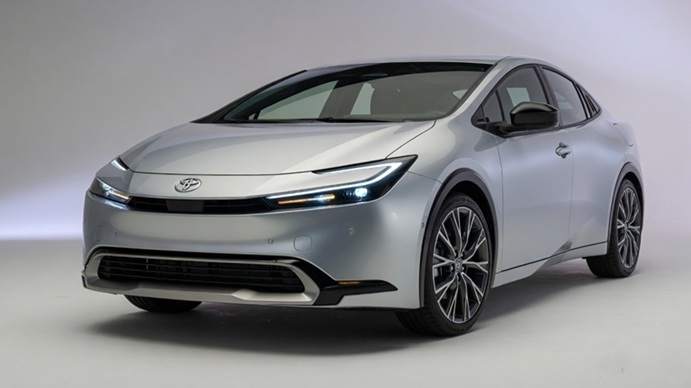
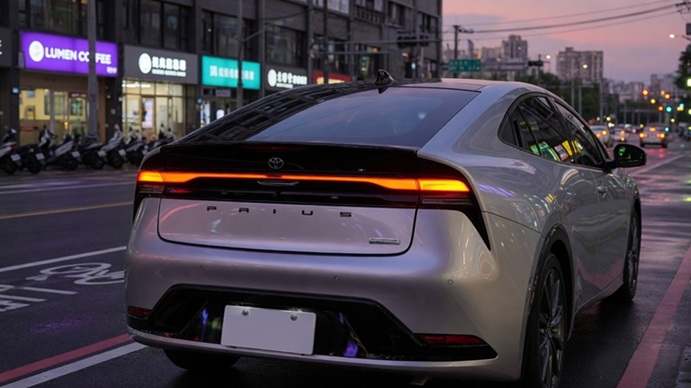
For the 2027 Toyota Prius, expect a light “nip-and-tuck” refresh rather than a ground-up redesign. Toyota typically refreshes models every 3–4 years in this era of extended product cycles (now pushing toward 9 years for full generations). Look for revised front and rear fascias, updated LED headlight and taillight signatures for a crisper look, fresh alloy wheel designs (likely 17- to 19-inch options), and a handful of new exterior color choices to keep things fresh.
Old vs. New:
- Pre-2023 (4th Gen): Boxy, upright “hatchback” proportions that prioritized utility over style; higher ride height and less aggressive aero.
- 2023–2026 (Current 5th Gen): Dramatically lower and wider (wheelbase stretched for better stability), with a fastback roofline and C-shaped LED headlights—already the “best-looking Prius ever.”
- 2027 Refresh: Same core silhouette and dimensions for proven aerodynamics (Cd likely around 0.24–0.25). Minor tweaks could include a slightly revised grille insert, new bumper accents, and perhaps adaptive LED lighting patterns. No radical changes like a wagon variant or lifted “Prius Cross” body style are rumored.
These updates aren’t about chasing trends but maintaining momentum. The 2027 Toyota Prius will continue to stand out in a sea of bland crossovers, with its hatchback practicality (generous cargo space behind the rear seats) intact. Hidden detail most buyers miss: The design already incorporates active grille shutters and underbody panels for class-leading drag reduction—refinements that carry over unchanged, helping sustain those headline MPG numbers.
Interior: Refined Minimalism
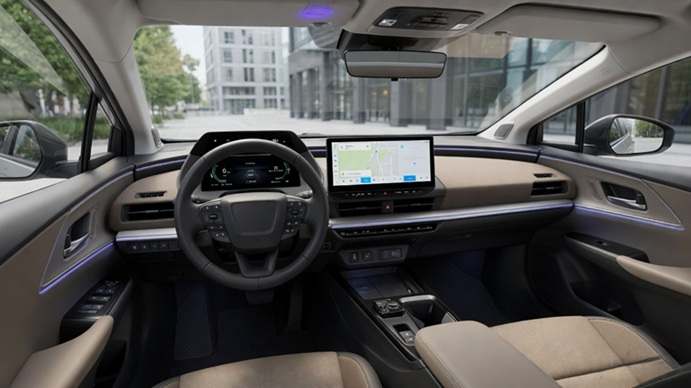
you’ll find a driver-focused cabin that’s worlds away from the plasticky, dated interiors of older generations. The 2027 model is expected to carry this forward with evolutionary upgrades rather than a full rethink.
Old vs. New:
- Older Gens: Cluttered dashboards, small screens, and hard plastics that felt utilitarian at best.
- Current 5th Gen: Clean, minimalist layout with a high-mounted 8-inch touchscreen (or larger on upper trims), digital instrument cluster, and improved materials. Spacious for five adults, with excellent visibility thanks to the low hood and slim pillars.
- 2027 Expectations: Subtle material upgrades (softer-touch surfaces, perhaps more sustainable fabrics), revised switchgear for better ergonomics, and minor layout tweaks. No massive screen jumps or overhauled architecture—Toyota is saving that for the true next-gen around 2029.
Practicality remains a strong suit: 20+ cubic feet of cargo with seats up, expanding significantly when folded. Front seats offer generous legroom, while the rear is comfortable for adults on shorter trips. A hidden gem not widely discussed: The 2027 Prius (like its predecessor) prioritizes a low center of gravity and flat floor for a planted feel, making long hauls less tiring than in some rivals. Expect the same wireless charging pad, USB ports galore, and supportive seating that made the current model a hit.
Proven Hybrid Excellence Carries Over
No major surprises here—the 2027 Toyota Prius sticks with the fifth-generation Toyota Hybrid System that’s already class-leading. The heart is a 2.0-liter Atkinson-cycle inline-4 gasoline engine (M20A-FXS) paired with two electric motors and an e-CVT transmission.
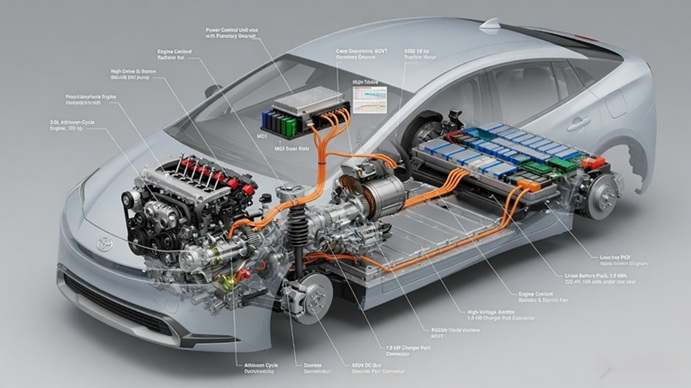
Key Specs (Expected to Carry Over)
- Standard Hybrid (FWD): 194 net combined horsepower; 0-60 mph in about 7.2 seconds.
- AWD Models: 196 hp with the added rear motor.
- Fuel Economy: Up to 57 mpg combined (LE FWD trim); real-world figures often exceed EPA estimates in mixed driving.
- Prius Prime (PHEV Plug-In Hybrid): Same 2.0L base but upgraded motors and larger battery for ~220 hp total. Up to 44 miles of EPA-estimated electric-only range, with faster charging capability and V2L (vehicle-to-load) power outlets in some configs.
2027 Toyota Prius Specs
| Category | Hybrid (FWD) | Hybrid (AWD e-Four) | Prius Prime (PHEV – FWD) |
|---|---|---|---|
| Engine | 2.0L 4-cylinder Atkinson-cycle (M20A-FXS) + two electric motors | 2.0L 4-cylinder Atkinson-cycle (M20A-FXS) + three electric motors | 2.0L 4-cylinder Atkinson-cycle + higher-output electric motors |
| Total System Horsepower | 194 hp | 196 hp | 220 hp |
| Transmission | Electronically controlled CVT (e-CVT) | Electronically controlled CVT (e-CVT) | Electronically controlled CVT (e-CVT) |
| Drivetrain | Front-Wheel Drive | Electronic On-Demand All-Wheel Drive (rear electric motor) | Front-Wheel Drive (AWD not confirmed for Prime yet) |
| 0–60 mph Acceleration | ~7.2 seconds | ~7.0 seconds | ~6.7 seconds |
| EPA-Est. MPG | LE: 57/56/57 XLE/Limited/Nightshade: 52/52/52 | LE: 53/54/54 XLE/Limited/Nightshade: 49/50/49 | N/A (hybrid mode ~52 combined) |
| EPA-Est. Electric- | — | — | 39–44 miles |
| Fuel Economy (Combined MPGe – Prime) | — | — | Up to ~127 MPGe (charge-sustaining) |
| Battery | Lithium-ion | Lithium-ion | Larger lithium-ion (PHEV-specific) |
| Width | 70.1 in (1,780 mm) | 70.1 in (1,780 mm) | 70.1 in (1,780 mm) |
| Curb Weight (approx.) | 3,097–3,340 lbs | 3,150–3,400 lbs | ~3,300–3,500 lbs |
| Seating Capacity | 5 | 5 | 5 |
Old vs. New Powertrain:
- Pre-2023: 1.8L engine in earlier gens—adequate but less responsive (around 121–179 hp total).
- 2023+ Current: The 2.0L jump brought stronger acceleration, quieter operation, and better highway merging without sacrificing efficiency.
- 2027: Identical hardware expected, with possible software tweaks for smoother regenerative braking, optimized thermal management, or tiny mpg gains (1–2 mpg at most). No new engine, larger battery, or sixth-gen hybrid architecture yet—that’s reserved for ~2029.
Performance feels peppy off the line thanks to instant electric torque, and the system seamlessly blends gas and electric power. A often-overlooked detail: Toyota’s hybrid synergy drive includes proactive energy management that anticipates driving conditions via GPS and sensors (on equipped models), maximizing efficiency without driver input. No pure BEV Prius is coming in 2027; Toyota is focusing hybrids while competitors push full EVs.
AWD Features: Electronic On-Demand e-Four
Toyota’s e-Four all-wheel drive (available on all trims for around $1,400 extra) is one of the Prius’s smartest features—and it should remain unchanged for 2027. Unlike mechanical AWD systems with driveshafts, e-Four uses a dedicated rear electric motor for on-demand torque to the rear wheels.
Hidden Details
- The rear motor provides proactive traction in snow, rain, or loose surfaces—activating automatically without driver intervention.
- It adds light torque-vectoring for better cornering stability.
- Minimal efficiency penalty: AWD models still achieve 49–54 mpg combined, depending on trim.
- Real-world benefit: Superior low-speed grip and confidence in adverse weather, without the added weight or complexity of traditional 4WD.
Compared to older Prius AWD (pre-2023 mechanical setups), the current e-Four is lighter, more efficient, and quicker to respond. No hardware upgrades are rumored for 2027; it’s the same proven setup that makes the Prius a surprising winter warrior.
Technology: Evolutionary Updates with TSS 4.0 Likely
The 2027 Toyota Prius will retain the current 8-inch touchscreen with wireless Apple CarPlay/Android Auto, but expect minor polish—perhaps faster response or new voice commands. Toyota Safety Sense (TSS) gets the biggest plausible upgrade: a quiet rollout of TSS 4.0, primarily a software evolution over TSS 3.0. This could enhance hands-free lane centering, nighttime pedestrian detection, and obstacle avoidance using existing cameras and radars—no new hardware needed.
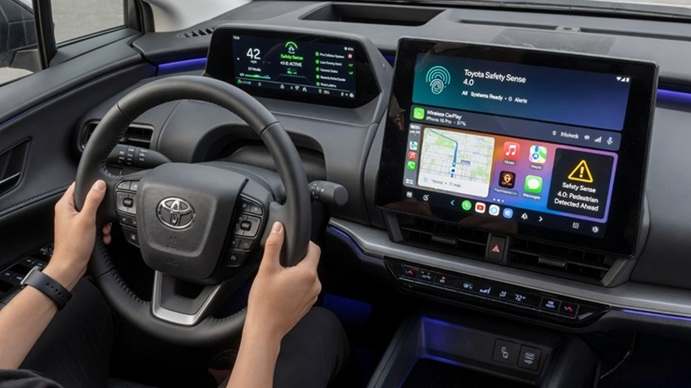
Old vs. New Tech:
- Earlier models had basic adaptive cruise and lane departure.
- Current: Full suite including blind-spot monitoring and automatic emergency braking.
- 2027: Smoother integration and over-the-air updates for ongoing improvements.
Connectivity features like over-the-air software updates (already standard) will keep the car future-proof without a dealership visit.
Who Is This For?
The 2027 Prius targets drivers who want hybrid efficiency without compromise on style or fun. It’s perfect for:
- Eco-conscious commuters: Those chasing 50+ mpg and low emissions.
- Younger families/first-time buyers: Sleek design appeals beyond traditional Prius owners.
- Urban/suburban drivers: Compact size, easy parking, and AWD for variable weather.
- Value seekers: Strong resale, low ownership costs, and Toyota reliability.
It’s not for off-road adventurers or those needing max cargo (consider a RAV4 Hybrid instead). If you loved the current model’s blend of efficiency and personality, the 2027 refresh keeps that intact while adding just enough polish.
Competition & Market Position
The hybrid market is hotter than ever. The 2027 Toyota Prius hybrid faces stiff competition from the Toyota Camry Hybrid (more spacious, similar efficiency, lower starting price), Honda Accord/Civic Hybrids (sportier drive), and Hyundai/Kia hybrids (longer warranties, aggressive pricing).
Yet the Prius holds a unique position: It’s the original hybrid icon with unmatched brand recognition, a distinctive hatchback body style for versatility, and proven long-term reliability. Sales dipped in early 2026 as buyers shifted to Camry hybrids, but the 2027 refresh could reignite interest by keeping the formula fresh without alienating loyalists. Pricing is expected to start around $29,000–$30,000 (slight bump from current ~$28,550), with top trims near $37,000—competitive and accessible.
In a world of rising EV skepticism and high gas prices, the Prius remains the safe, stylish bet for real-world efficiency.
FAQ/ Frequently Asked Questions
Q: Should I buy a 2026 Prius or wait for the 2027 refresh?
A: If you need a car now, the 2026 is nearly identical mechanically and a great deal. The 2027 changes are cosmetic/tech-focused—worth waiting only if you want the latest colors or TSS 4.0.
Q: Will there be a Prius Prime PHEV in 2027?
A: Yes, with the same ~44-mile EV range and 220 hp. No major battery upgrades expected.
Q: How much will the 2027 Prius cost?
A: Estimated $29,000 starting; exact MSRP closer to launch. Expect similar trim structure (LE, XLE, Nightshade, Limited).
Q: Is AWD worth it on the 2027 Prius?
A: Absolutely for snow-prone areas—the e-Four system is seamless and efficient.
Q: Any chance of a full electric Prius in 2027?
A: Unlikely—Toyota prioritizes hybrids for now; a BEV version may arrive later.
Q: What about reliability and maintenance?
A: Toyota hybrids are legendary for 200,000+ miles with basic care. The 2027 should match or exceed current models.
Q: Will fuel economy improve noticeably?
A: Minor gains possible via software, but don’t expect 60+ mpg leaps.
Q: How does it compare to older Prius models?
A: Far more stylish, powerful, and refined—night-and-day better than 2010s versions.
Q: Any new colors or special editions?
A: Possible fresh hues; Nightshade-style blacked-out packages likely return.
Q: When can I order one?
A: Late 2026 for 2027 models—check Toyota dealers closer to fall.
The 2027 Toyota Prius isn’t trying to reinvent the wheel—it’s perfecting a winning formula with thoughtful, low-key updates that enhance what already works. From its sleek exterior and efficient powertrain to capable AWD and modern tech, this refresh ensures the Prius stays relevant in a competitive landscape. If you’re in the market for a reliable, stylish, and ultra-efficient daily driver, put the 2027 on your radar.
Related Post