
For years, American Tesla owners have taken Full Self-Driving (Supervised) for granted. We complain about the occasional phantom braking or laugh at the car’s occasional weirdness at four-way stops, but we’ve also watched it evolve from a party trick into something that can genuinely handle cross-country trips with minimal intervention. In Europe, owners could only watch from afar—stuck with Enhanced Autopilot while we got the good stuff.
That changed in April 2026.
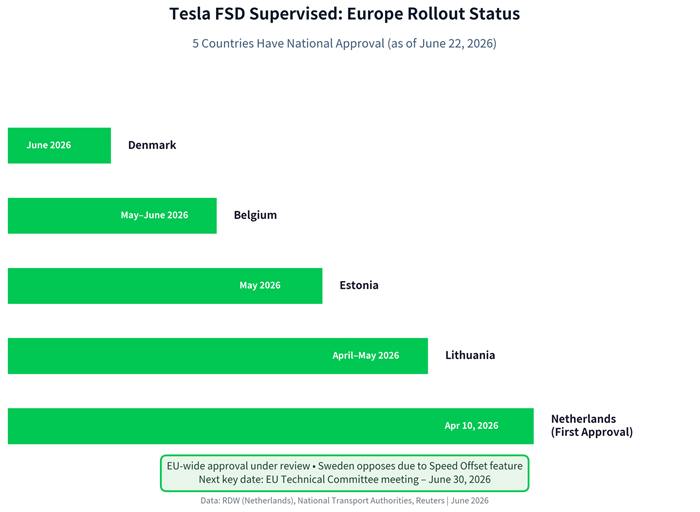
On April 10, the Dutch vehicle authority (RDW) granted the first European approval for Tesla FSD (Supervised). Early access users in the Netherlands started receiving the software shortly after. Lithuania, Estonia, Belgium, and Denmark quickly followed by recognizing the Dutch approval. For the first time, European Tesla drivers could pay roughly €99 per month and experience what we’ve had for years.
Tesla was bullish. The company had logged massive European testing miles, submitted thousands of pages of documentation, and believed a broader EU rollout could happen by summer. After years of regulatory frustration, it finally felt like momentum. Then Sweden hit the brakes.
In mid-June, a letter from Sweden’s Transport Administration (dated April 30 but only recently made public) landed like a speed camera flash. Sweden told the EU’s Technical Committee on Motor Vehicles: do not approve Tesla FSD across the bloc unless the company removes the “Speed Offset” feature.
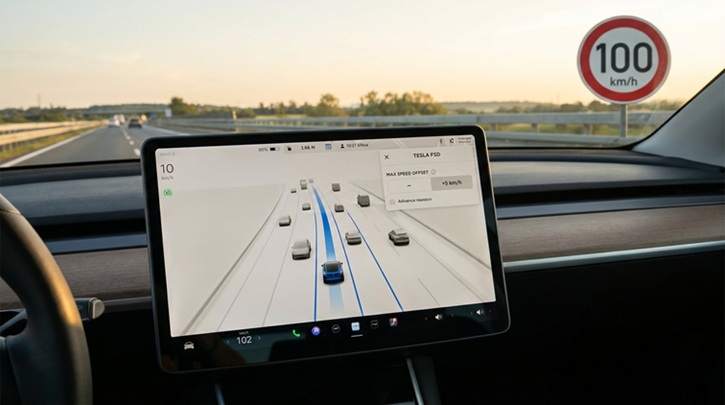
In the US version of FSD, you choose a driving personality—Chill, Standard, Hurry, or the unhinged Mad Max. Europe got a different interface. Instead of those profiles, Tesla offers “Contextual Max Speed” (which tries to match surrounding traffic) and a Max Speed Offset slider.
You can tell the car to drive at the posted limit plus 5 km/h, plus 10%, or whatever margin you set. The idea is practical: traffic rarely moves at exactly the speed limit, and a car that sits 10 km/h slower than everyone else creates its own problems.
To most American drivers, this feels normal. On our highways, 5–10 mph over the limit is often the actual flow of traffic. FSD doing the same thing just feels… human.
Swedish regulators see something else entirely. Their letter was direct: allowing an automated system to systematically exceed legal speed limits “risks undermining both the legal framework and the expected safety benefits of vehicle automation.” Sweden’s representative on the EU committee has made it clear—they will vote no unless Tesla disables the offset capability.
This isn’t abstract bureaucracy. Europe enforces speed limits differently. Speed cameras are everywhere, fines are painful, and the culture treats speeding as a serious violation rather than a flexible suggestion. Letting the car’s AI have a built-in “I’ll go a little faster” option feels, to them, like designing the system to break the law from the start.
Tesla faces a genuine dilemma here. Removing or geofencing the Speed Offset for Europe is technically trivial—a software flag. But it risks making FSD feel less capable or less natural to European buyers. If the car becomes overly timid, glued to the exact speed limit while traffic flows around it, owners might wonder why they’re paying extra.
More critically, an EU-wide rejection could create a domino effect. The Dutch approval is provisional. If the broader European effort fails, that approval could lapse after six months, potentially dragging down the national approvals that relied on it. Expansion that looked inevitable a month ago could stall or fragment.
For American readers, this story reveals something important about Tesla’s global bet. FSD was trained heavily on American roads, American driving culture, and American tolerance for “reasonable” speeding. Exporting it isn’t just a software update—it’s a negotiation with entirely different philosophies about risk, liability, and how strictly rules should be followed.
Tesla has navigated tough regulatory environments before (China comes to mind). They’ll almost certainly find a workaround—likely a stricter “EU compliance mode” or heavy lobbying ahead of the June 30 committee meeting. But every month of delay costs subscriptions, real-world training miles, and sales momentum in a market where Chinese EVs are already aggressive competitors.
The irony is hard to miss. One of the most advanced AI driving systems in the world is currently being slowed down by something as ordinary as speed limit rules. It’s a reminder that the hardest part of autonomy may not be teaching the car to drive—it may be teaching regulators and cultures to trust it.
FSD has finally arrived in parts of Europe. Whether it can spread freely, or whether it gets stuck negotiating speed limits country by country, will tell us a lot about how quickly (or slowly) the rest of the world catches up to what American Tesla owners have already been living with. The technology is ready. The regulations—and the cultures behind them—are still catching up.
Related Post